
Bait • Coins
On agentic payments, crypto mining, and switching industries.

Since my latest post, I’ve been pretty active in other areas of my life. I managed to deal with college, travels, my passion for lecture and cinema, and a really aggressive compulsivity in my listening of music. Yet another event pushed me to bath myself into a world I didn’t know a lot about, I invested in Nebius. Old Russian spin-off turned European neocloud, having also a share in the growing AV industry, Nebius’ stance in a large series of industries pushed me to take a closer look at a company with which its stock price is more than normally correlated, CoreWeave.
CoreWeave’s recent operations have called me to look further into the industry in which it operates, but most importantly, in which it did operate in the past, crypto mining. Already well aware of the turn some crypto mining related companies have taken, recent news about the ever changing price of Bitcoin, the announcement of such projects as agentic microtransactions on the blockchain, and the ever growing scare about traditional banks’ slower systems, that post will try to study the brief history of the crypto mining industry, raise issues about its profitability, observe the changes some crypto mining companies embarked upon to service their infrastructure to AI, and also lay out hypotheses about the agentic payments bullish or bearish case.

understanding crypto-mining history
Along Satoshi Nakamoto’s greatest contribution to society, blockchain technology, came Bitcoin. Not being a true fan of the cryptocurrency myself, the breakthrough it represented isn’t debatable. Since then, a lot of ink has been spilled to write about it, a broad range of similar technologies and transformations have appeared in the financial world as well, and some not so well dressed gurus have been pilling up on the internet chanting the glories of the killer of fiat money.
As articles and crypto enthusiasts like to recall, the first generation of crypto mining happened on personal computers, with early amateurs obtaining their first Bitcoins using their pc’s CPU. As he/she/the group/Satoshi Nakamoto published the technology’s white paper in early 2009 was mined the first ever Bitcoin following the same process. In these earlier times, tech nerds and developers took interest in blockchain for less than what it was, simply focusing on Bitcoin’s promise of taking over the established banking system and transforming money as it was known. Of course, from today’s standpoint, the most important innovation from the bunch was the creation of a decentralised sphere of ownership for the digital space, something the American entrepreneur and investor Chris Dixon approached masterfully in his book “Read, Write, Own : Building the next era of the Internet”.
But CPU mining didn’t last longer than the time we take to pronounce it, as in 2010 was established the first GPU mining farm by a developer and bitcointalk.org member ArtForz. As it is the case for a lot of early Bitcoin miners, the location of that mining farm is and will always be unknown. The advantage of GPUs compared to the precedent generation of crypto mining was that they could be programmed for specialised tasks, and some internet statistics infer that the mining power evolved by more than 600% between the two devices.
In between these two generations was created the first ever mining pool by a little tech enthusiast from the Czech Republic. The project became a stand-alone public company still operating today under the name Slush Pool. For people not familiar with the crypto world — as I was before doing research for this post — a mining pool can be described in these words in the context of crypto mining : A mining pool is a coordinator that groups miners’ hash power, gives them work, and then splits any block rewards among them according to their contributed work (shares), minus a fee. Essentially, users connect their devices’ power to a centralised network, contributing to the necessary power to extract Bitcoins.
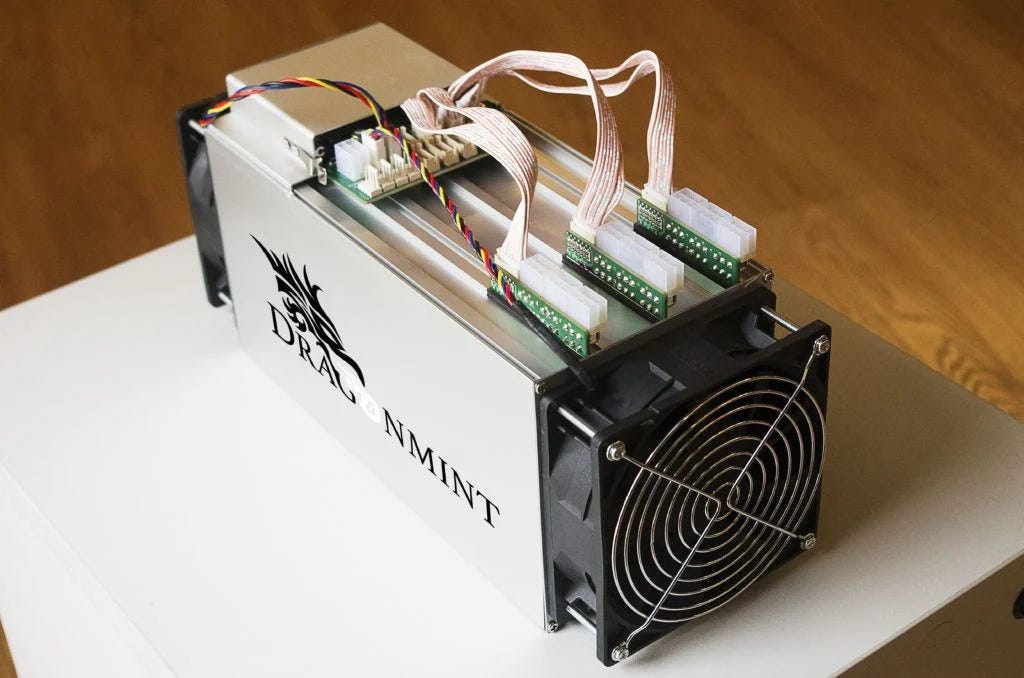
After this progress has been made, another device came to impact the crypto mining industry, as it could be programmed for even more specialised purposes, in this case, crypto mining. These devices were called ASICs, as in Application-Specific Integrated Circuit, and directly operated as catalysers for single tasked operating devices, compared to more broadly used CPUs and GPUs. This was known as the third generation, and lived from 2013 onward. Though the technology used in crypto mining evolved in no time, no real innovation has been made in the industry since then, except the apparition of mining Cloud Pools, which are self-explanatory. A recent article I read on the topic argued that this stop in innovation has arguably made debates appear over the current power of one miner to compete with entire companies which purposes are to mine pieces of the crypto-currency. It said that “For the first decade or so of Bitcoin’s existence, miners could win out by employing more advanced hardware than their competitors. But unless there is a revolution in semiconductor or computer technology, this may no longer be a winning strategy. As the most advanced ASICs become cheap enough such that all miners can afford to use them, miners will need to think of new ways to beat out the competition.” Yet even if their power has been proved many times, the majority of miners still use GPUs for crypto-mining purposes, because of their accessibility and cheaper price that specifically programmed ASICs.
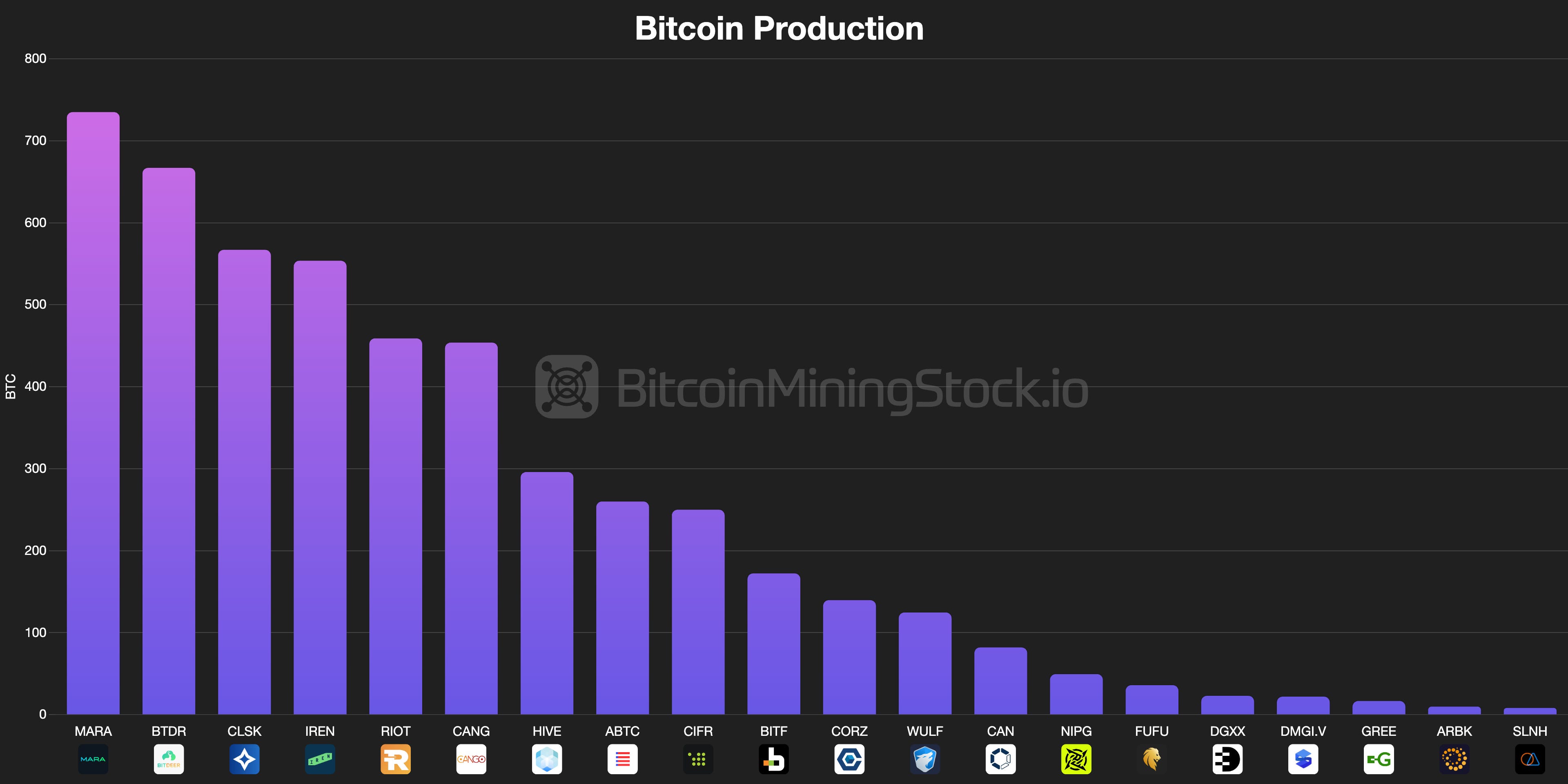
A 2023 study declared that the crypto mining industry grew a steady 30 to 40% each year for the past decade. Can be witnessed this power of the mining companies compared to the little stand-alone user in his room in more accessible data, as the graphic below shows the amounted Bitcoins mined over certain timespans by these larger and larger corporations over the years. Yet as you will observe the different companies at the bottom of the image, you will probably recognise some companies you thought were operating in other industries, and this will be the exact thing we will try to enlighten next.
we don’t have any money, man
One argument for the use and intensive development of crypto mining farms hasn’t only been the obtention of bitcoins, as the number of bitcoin “rewards” per block has only decreased from 2010 onward, but concerned their proved impact on sustainability and clean energy consumption. As operating a crypto mining farm requires large inputs of energy, hence staying away from cities and populated areas, most farms have been established around cleaner and more sustainable sources of energy, as geothermal, geysers and sunlight operated energy production areas, so much so that certain American states have proposed tax deduction policies for the development and operation of crypto mining and crypto related data centres.
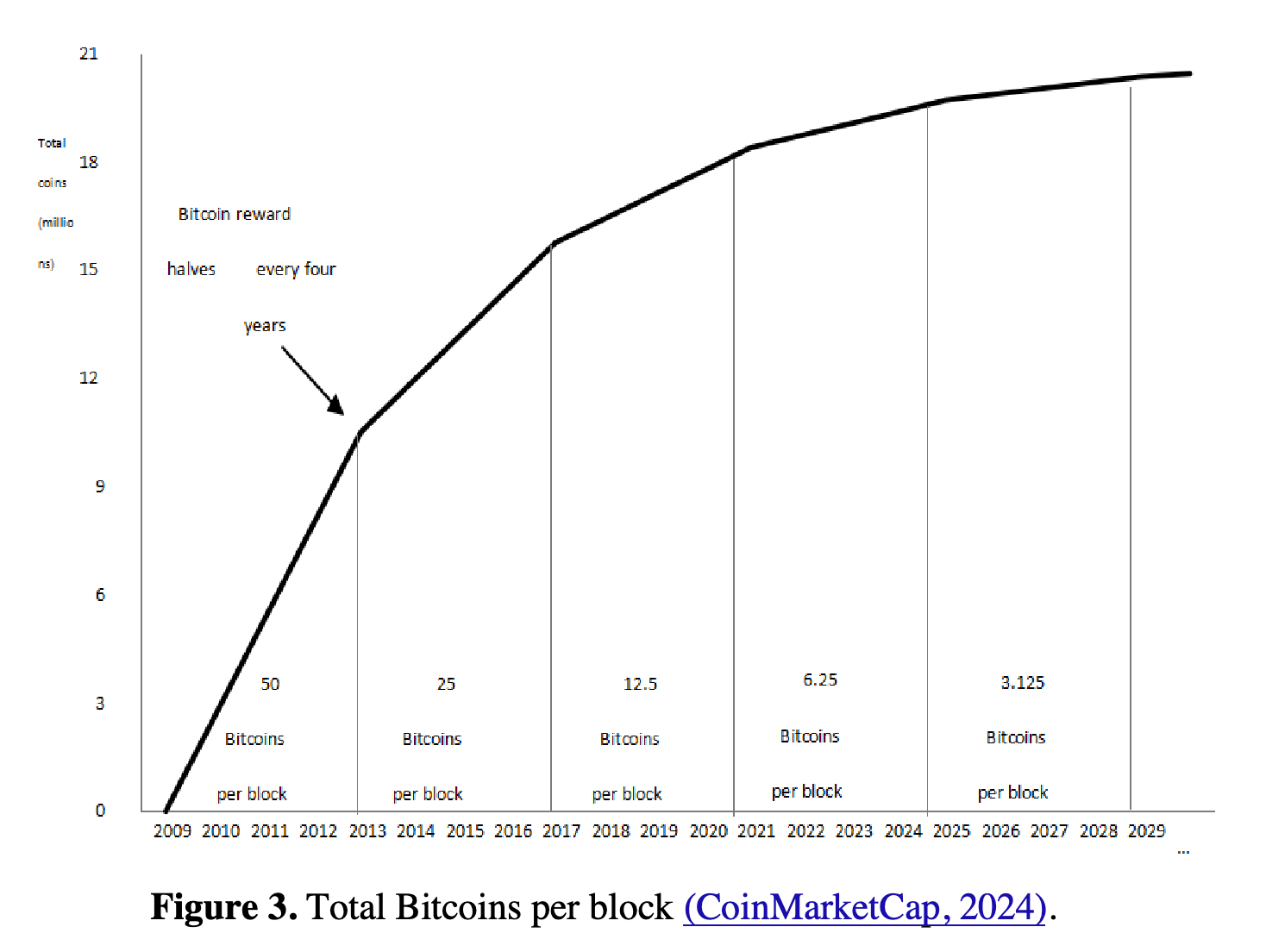
Yet we first have to tackle the industry’s first problem with the decreasing bitcoin returns per block mined. Profitability. In a 2023 article called “Is BlockChain Mining Profitable in the Long Run?”, researchers answered with a definitive no, unless the industry is supported by never declining substantial fees. The majority of the most known and exchanged cryptocurrencies have nearly been entirely mined, which brings the problem of the sustainability of the their business model. In the conclusion of that same article, bringing out Ethereum, the researchers explain “We find that despite historical precedence, current hash rate growth coupled with Ether’s price growth currently make it difficult to generate profitable mining operations for more than a year utilizing organic growth.”
One reason for the ever growing need to change and ameliorate a device’s mining capabilities isn’t focused solely on profits and increasing revenue streams, it’s focusing on efficiency. In a 2018 paper, already a decade after the first ever Bitcoin was minted through Nakamoto’s computer, researchers defined the crypto-mining industry’s profits as converging to zero, not only because a growing competition in a market focused on one single good pushes the profits of each participant to decrease dramatically, but also because energy prices and every day operations costs were driving the liquidities to negatives territories. “A sustainable crypto currency needs higher payments for miners or more energy efficient algorithms”.
Came the alternative industry of the simple Bitcoin holders like Microstrategy (now Strategy) that, enjoying already existing capital, heavily bought the already minted Bitcoins to rely on the crypto price’s increase to turn a profit, instead of wasting money on not so predictable mining activities. Some other companies, like of the Trump’s sons Hut 8 mining and holding companies have then mixed the processes to be at the two extremes of the holding and mining industries in the crypto world.
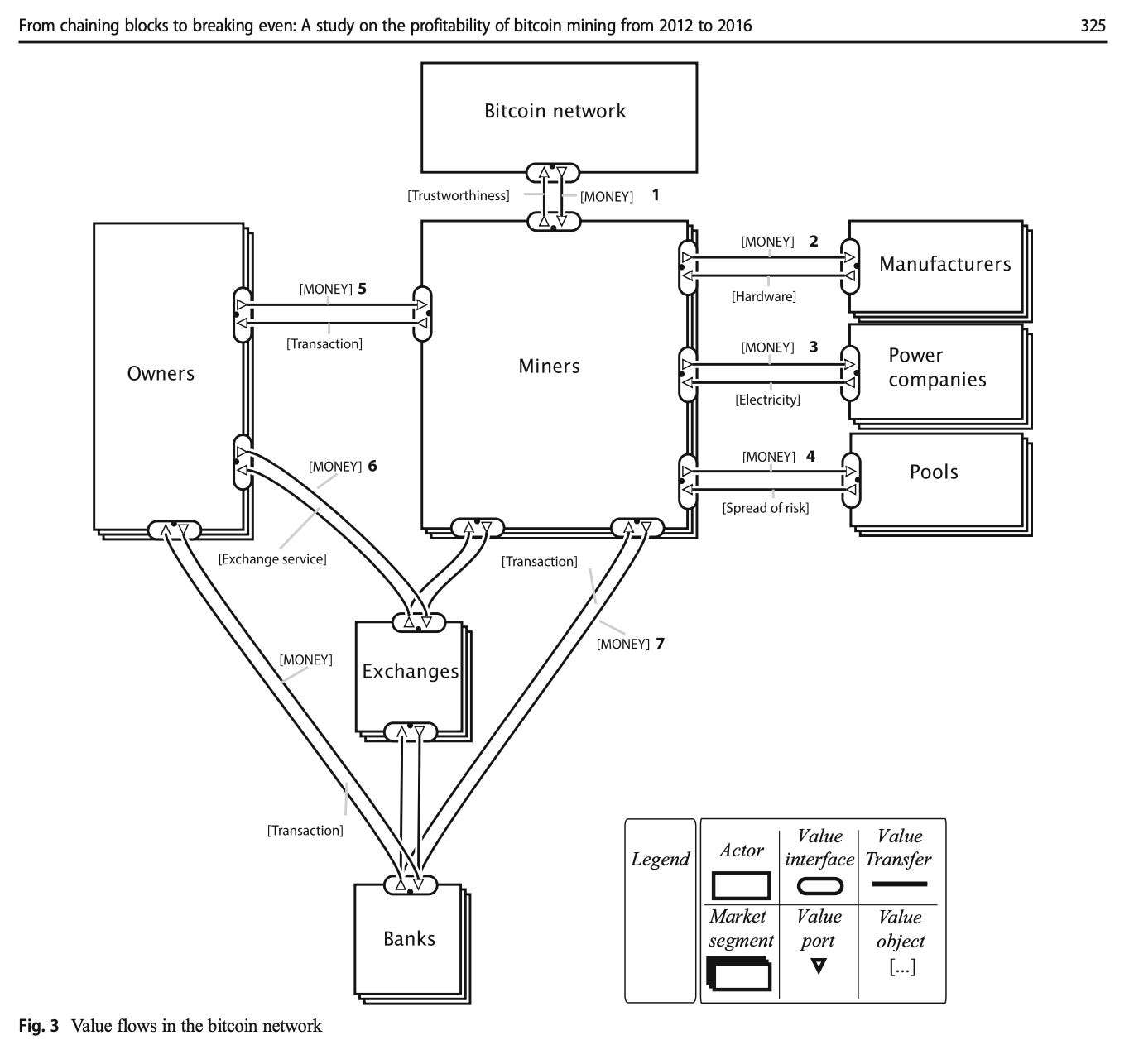
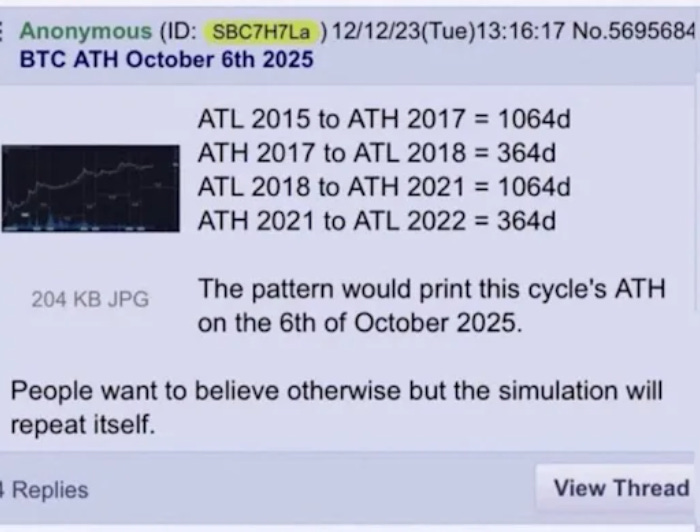
Funnily enough, the entire Bitcoin network runs on fiat money flows, which guarantee its existence and widespread use. As more and more companies started to realise their operations needed more funding with liquidity they didn’t have, birthed the idea of using the already up and running infrastructure for more lucrative, or even barely breaking even purposes. As Frank’s character in the very first episode of the TV Series Succession said, the industry wanted “A jazzillion dollars in unmarked Bitcoin”, to maybe produce more of them. As it wasn’t enough, this post hasn’t even underlined the discussion of these cryptocurrencies’ trading prices, which after skyrocketing in the last year dramatically decreased to attain a mere $70,000 a few days ago, or more than a 40% drawdown from its all time highs. Not a fan of conspiracy nor predictive theories myself, I did come across an interesting post that was posted a few years ago, that studied the tendencies of Bitcoin’s stock price and having predicted the day of the latest All Time High with a strikingly perfect accuracy.
But crypto holding and mining companies aren’t the same, in their operations as in their business models. The first rely on the holding process while the other looses money on a daily basis because of higher growing costs and decreasing profitability. That’s where the change comes in.
yep, uh, we don’t do that anymore, we’re in AI now
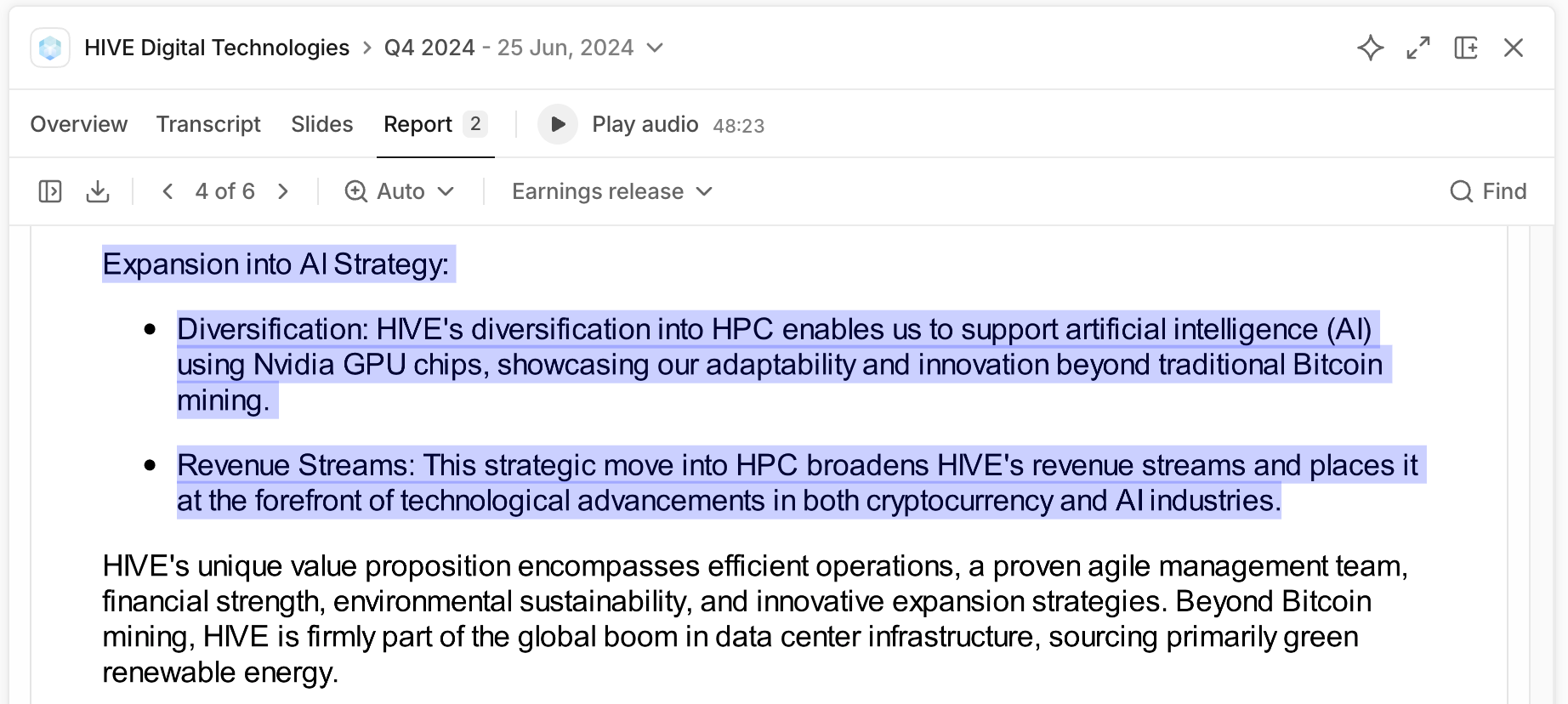
In 2023, Hive Blockchain rebranded to Hive Digital Technologies with a clear goal in mind, enter into the AI infrastructure buildout by servicing their already existing data centres and industrial capacities, slightly diverging from their only goal to date, crypto mining. In a video interview that same year, Aydin Kilic, Hive’s CEO and President told the reporters that despite a solid business model and minimal debt, the company was undervalued compared to its peers and that its focus should be aggressive growth in AI, focusing their vision on sustainable energy sources as well. That plan, the company said, laid out a vision to reach more than $100m in annual revenue. Taking a step back, that number is something they couldn’t even think of with their then current bitcoin mining operations.
Yet it’s not the only company that changed the “blockchain” in its name to take on “digital”, as Applied Blockchain became Applied Digital a couple of years later, still ongoing the transformation, servicing its already well developed infrastructure for AI related purposes, and yet again, cleaner and more sustainable energy. Other players include Crusoe, Core Scientific, but more importantly, two new very popular actors in the AI world, for which many letters have already been typed, CoreWeave and IREN.
I recommend you checking out Kakashii’s recent article called “CoreWeave and the Never-Ending GPU Depreciation — A Masterclass in Accounting Elasticity”, as not entering the scope of our post, that explores already an interesting side of companies in CoreWeave’s vein, and their recent movements.
Technically, the transformation paid off operationally, more energy, cleaner also, has been powering the progress of the AI race, benefitting behemoths and growing startups alike. Yet on a more liquidity related level, that turn has shown to be extremely capital intensive, with ever more debt and money raised at every corner of the Valley and the world in order to sustain the development of that cemetery of AI startups without revenues (or lying about it) or to feed giants. It all laid out the possibility of having an unprecedented debt crisis, which one of my first ever articles on Substack shared the iceberg of. Accounting tactics and potential frauds might be the only thing that save us from the abyss.
What has been the impact on the sector ? Well, has one of my sources already laid it out perfectly, I’ll let you read these paragraphs from the Uptime Insitute’s article on the transformation of crypto-miners, on which I don’t have anything to add nor to remove : “Do crypto miners have an edge in data center development? What they do have is existing access to power and a higher tolerance for technical and business risk — qualities that enable them to move faster than much of the traditional competition. This willingness to place bets matters in a market that is lacking solid fundamentals: in 2025, capital expenditure on AI infrastructure is outpacing revenue from AI-based products by orders of magnitude. The future of generative AI is still uncertain.
At present, this new category of data center operators appears to be focusing exclusively on the ultra-high-density end of the market and is not competing for traditional colocation customers. For now, they don’t need to either, as demand for AI training capacity alone keeps them busy. Still, their presence in the market introduces a new competitive threat to colocation providers that have opted to accommodate extreme densities in their recently built or upcoming facilities.
M&E and IT equipment suppliers have welcomed the new arrivals — not simply because they drive overall demand but because they are new buyers in a market increasingly dominated by a handful of technology behemoths. Some operators will be concerned about supply chain capacity, especially when it comes to large-scale projects: high-density campuses could deplete the stock of data center equipment such as large generators, UPS systems and transformers.
One of the challenges facing this new category of operators is the evolving nature of AI hardware. Nvidia, for example, intends to start shipping systems that consume more than 500 kW per compute rack by the end of 2027. It is not clear how many data centers being built today will be able to accommodate this level of density.” Might be the best paragraphs I’ve read on the subject so far.
Though it’s not because crypto-miners are turning to AI that their bottoms lines are soaring. Even if massive and always growing contracts are being acted between actors of the industry, money flows aren’t always correlating with the moment the papers are signed, as Nvidia’s dancing money promises to OpenAI are always being discussed, the latter probably ongoing problems which we don’t know nothing about. The passage from one industry to the other might considerably affect some players in their first operational years as their business models will be translating into something that is already more capital intensive, albeit more revenue promising that crypto mining. Balance Sheets and Income Statements will certainly be undergoing some chaotic change.
so what about crypto ?
If more and more actors turn their backs on crypto-mining in favor of AI, less people will compete in the same category, and for that single good, yet it doesn’t promise a heavenly future for the industry, for the reasons we already explained in detail above. What we could call market cryptos, such as Ethereum, Bitcoin, Solana and even including a bunch of memestocks, will certainly follow the same rotations in the coming years, as they always did, promising maybe more important All Time Highs, but more impactful drawdowns to All Time Lows as well.
yet could blockchain tech be empowered by AI ? yes, but without us
A few days ago, a Bloomberg Article circulated heavily on X, with the title “Stablecoin Firms Bet Big on AI agent Payments That Barely Exist”. In the afternoon, already millions of accounts were giving their opinions and debating whether or not the agentic payments thesis would benefit the economy or present itself as a total fiasco, as many companies are already said to be working on such a system, allowing AI agents to process micropayments in a matter of seconds, opening the possibility for such machines to realise millions of transactions a day, compared to slower humans.
Appeared another really interesting argument, saying that even if you could capture a large part of that market, you couldn’t really make money out of it. It could make us return to the precedent statement laid out in this post, as of saying that blockchain related services would demand a large input of fiat money without outputting enough revenue, hence profiting to no one.
The real power of these kinds of payments wouldn’t be in their operations, but in their surveillance, in their risk management, and their insurance. Agentic payments would only benefit the companies surveilling their overall risk, not enjoying the revenues of growing transactions fees as plain payments and crypto mining activities do.
The entire process would place itself as already superior to traditional banks’s operations, as Circle allegedly settled more than $60m internally with USDC in a mere 30 minutes. Where would it prove to be useful ? In every day operations, micro transactions without any money attached at the entry of public institutions to verify your identity, turning your car on, switching your phone off, it could replace a large part of micro activities, acting as relations with the outside world. This will certainly a subject that we will cover over the next few weeks and months, as this technology will certainly have its place among the development of device controlling AI models.
Yet another X user commented a really interesting thought. Agentic payments are only bullish when humans loose interest in crypto.
The pivot from companies like Hive Digital and CoreWeave from mining to AI infrastructure is a fascinating case study in "asset repurposing." While ASICs are hyper-specialized and face rapid obsolescence (the "treadmill effect" of hash rates), the transition to GPU-based AI clouds proves that the real value wasn't just the Bitcoin—it was the early-mover advantage in securing high-density power contracts and cooling infrastructure. As you noted, "tolerance for technical risk" is now the primary currency in the race to build out the neocloud.
Given that Nvidia’s roadmap points toward 500kW+ per rack by 2027, do you think the "repurposed" crypto-mining facilities will face a second wave of obsolescence because their current power density and cooling designs can't keep up with Blackwell-class (and beyond) requirements?
I'm not an expert in the field, yet purpose rotation from a highly technical and expertise based field such as crypto mining to broadering AI infrastructure servicing has proved costly, yet it's not proved that former and current investments will be useful to compete with companies to which AI was a starting purpose. The future will prove that these enterprises are either on the right path, employing the right people to make the transition, and proving their worth in the industry or jumped on it because of quickly attracted money and longer term contracts that might not be secured. What do you think ?