
Double • Indemnity
When a 1944 movie tells a lot about the current AI race

This analysis starts with a movie.
Double Indemnity is a 1944 classic directed by the grand Billy Wilder and starring Barbara Stanwyck and Fred MacMurray. It’s a film noir, which studies the complexities of human relationships, love, murder, hope and treachery. It is resumed in this way : “An insurance representative is seduced by a dissatisfied housewife into a scheme of insurance fraud and murder that arouses the suspicion of his colleague, a claims investigator.” It also happens to be my favorite movie of all time.
Yet by studying it again while watching it, an idea crossed my mind as to compare that story to what is happening in the current AI related landscape, with every single player fighting for his life and the others at the same time. But which of the characters will survive in the end ? Which of our protagonists (or antagonists) can be seen as future proof while navigating the market’s current volatility and expected to deliver stronger returns ?
Because that analysis can’t be made without telling a bit more about the plot and the characters, there’s sadly spoilers ahead. Or if you’d like to really bath yourself into the analysis, I recommend watching the movie first, you won’t regret it.
The Plot
As my love for the movie extends far beyond the limits of a post, I asked Perplexity to describe it for you :
Double Indemnity (1944) follows insurance salesman Walter Neff, who becomes entangled with seductive housewife Phyllis Dietrichson during a routine policy renewal visit. Framed as Neff’s dying confession recorded for his colleague Barton Keyes, the story begins with flirtatious banter that swiftly turns into a plot to murder Phyllis’s neglectful husband for a double indemnity payout—doubling the life insurance if his death appears accidental, like falling from a train. Neff masterminds the scheme, disguising the policy and staging the killing with chilling precision, but cracks emerge as Keyes’s sharp instincts raise suspicions over inconsistencies.
Tensions escalate when Phyllis’s stepdaughter Lola reveals her mother’s likely murder by Phyllis and fears for her own safety amid the web of deceit, including Phyllis’s affair with Lola’s boyfriend. In the climax, Neff confronts Phyllis in a rain-soaked showdown; she shoots him but falters, allowing him to kill her before staggering back to the office. Collapsing as Keyes arrives, Neff completes his confession, sealing their doomed fates in this quintessential film noir of greed, betrayal, and moral descent.
Who’s the insurance salesman ?
Since the launch of ChatGPT by OpenAI a few years ago, the current tech ecosystem has been infected by the need of driving each company’s strategies and processes by automating most of its tasks with Artificial Intelligence. It has been the beginning of a very intense love affair not only between companies and enterprise related AI models but most importantly between these same companies and gigantic amounts of debt.
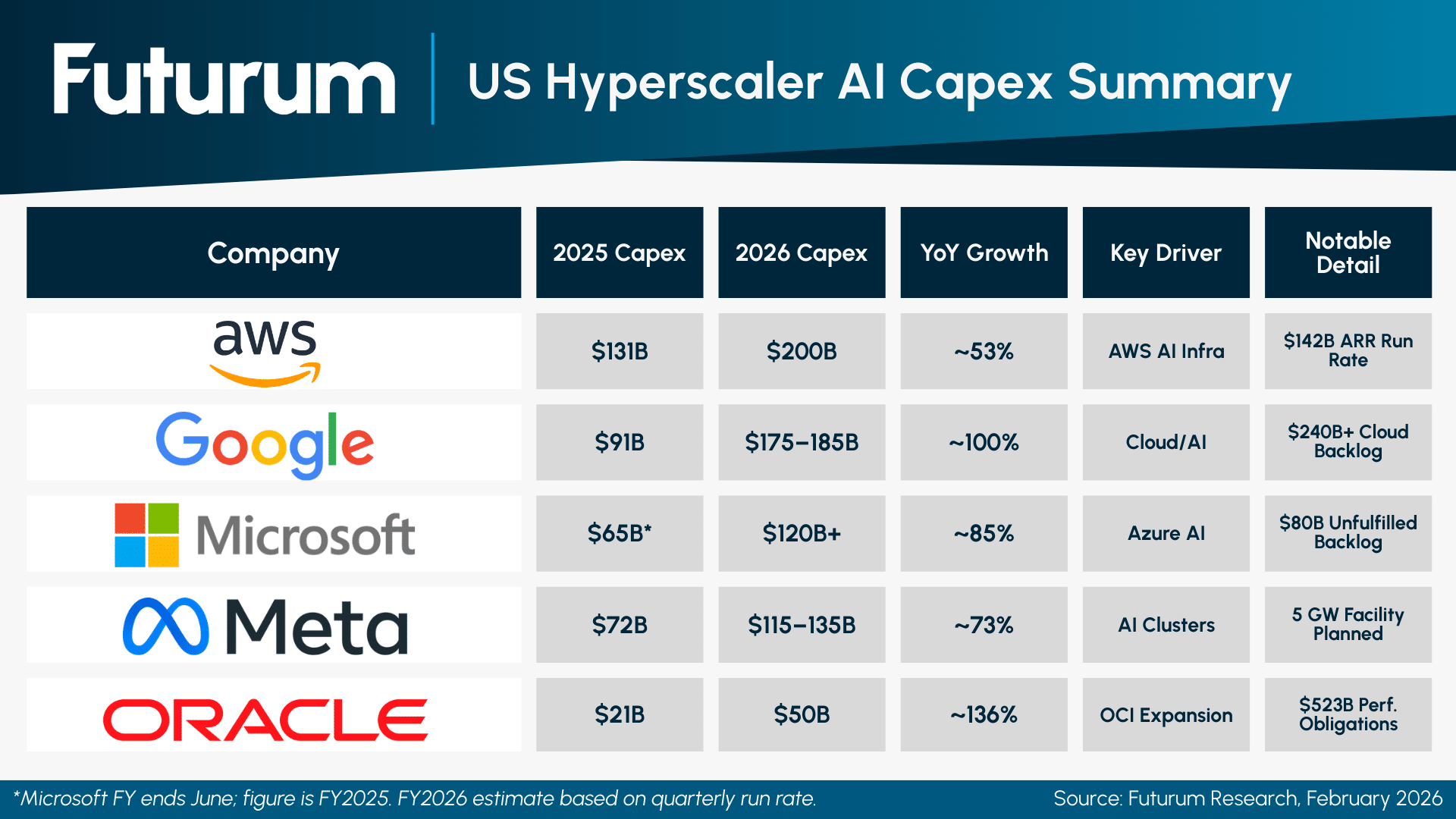
On that note, we’ve learned a few days ago on one hand that the expected AI related infrastructure spending will probably amount to more than $600B, which is more than all the tech related spending in the 2010s combined, but also on the other hand that long standing companies can allow themselves to raise debt on periods that most of us won’t live (Alphabet issued 100y bonds, which is a proof that the company is here to stay and will outlive any startup that thinks its the next big thing, but most importantly, that the company is so confident that it can even think about doing something plenty governments couldn’t).
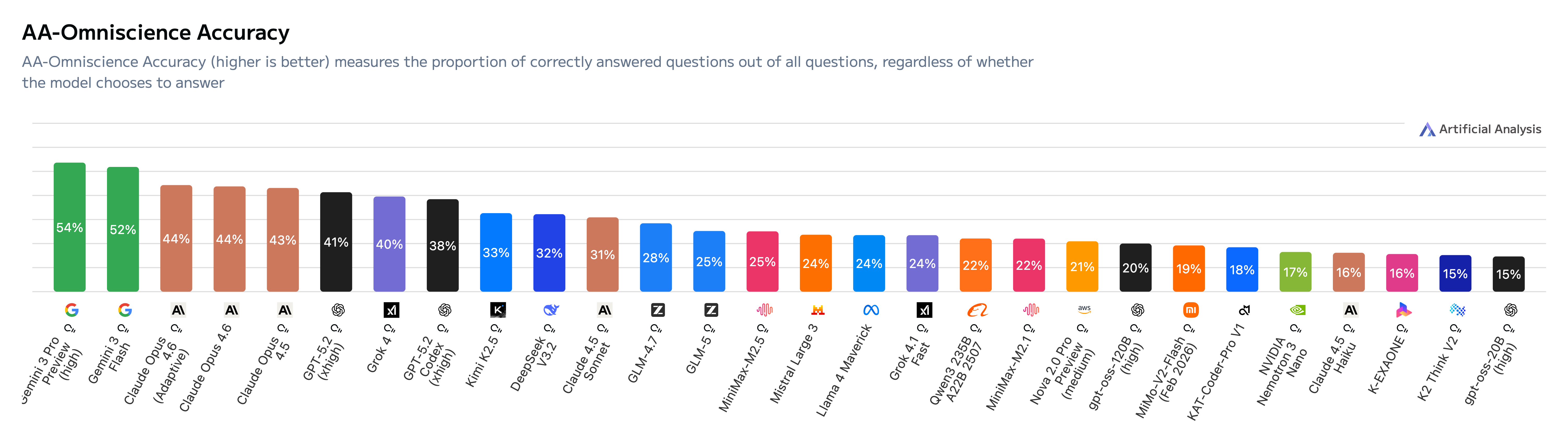
Of course, the AI race has changed a lot since 2022, and it became more of an AI infrastructure building rather than a true race towards advanced machine thinking, AGI still being impossible for most of the companies that have the desire to achieve it. At the end of January, Anthropic released its masterpiece, Claude for desktop, which made the tech sector crash a few days later. On the opposite side, OpenAI released, well, ads. That race is certainly more asymmetric than it used to be even a couple of months back.
Then who’s our Walter Neff in the story ? Who’s our seduced insurance salesman who’ll co-conspire the crime ? Well it’s not going to be easy to define one single player, because its all of them. All companies deciding or having decided to include AI in their processes are susceptible to enter in our definition of Walter Neff’s character.
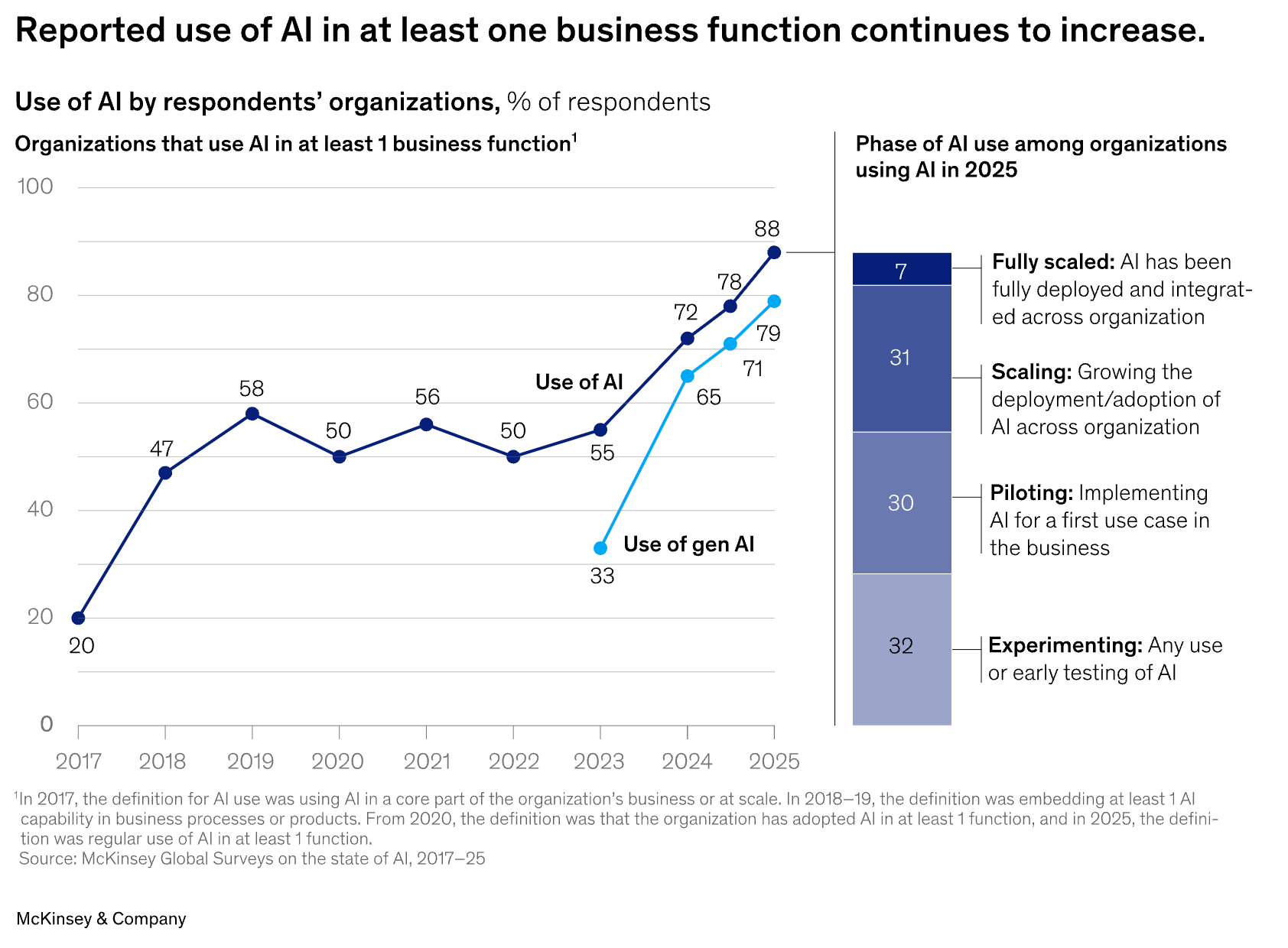
In their 2025 report on the state of AI in business, McKinsey declared that nearly 90% of their respondents’ organisations were using AI in their processes, even including a larger and steady growing share in the use of gen AI.
But Walter Neff is not perceived as a naive character at first. Clean records, more than a decade of grinding the career ladder, collaborating with the insurance detectives on the investigation of phonies and cheaters. US companies as being discussed here aren’t that naive either. S&P500 companies have been pretty reasonable in their margins of errors in the past twenty years, and those who haven’t left the index pretty quickly.
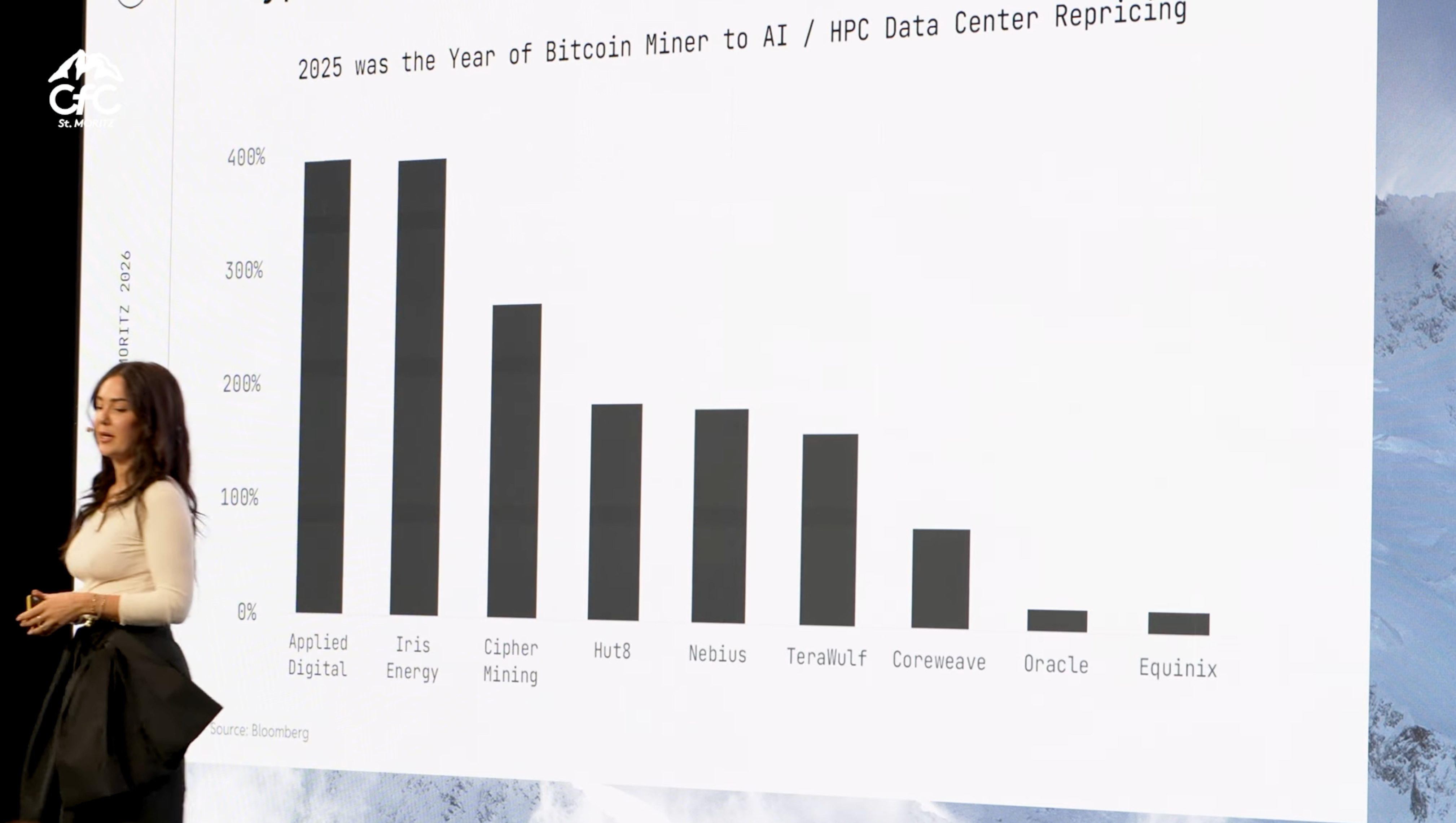
The latest tech tricks have not driven an equal amount of excitement as AI did. Bitcoin has certainly been a pretty intensive incentive in the building of future tech development. NFTs are a thing of the past that just slightly changed the way investors could loose money for a few months. Yet they all had an impact on what we could expect from the future. As Crucible Capital’s Meltem Demirors even added, AI wouldn’t have been here if not thanks to data centres established for crypto mining goals. As she added in one of her latest conferences, some of our well known energy and infrastructure players in the AI race were once crypto related companies that transitioned to data and AI.
That first meeting that changed it all, Neff in awe looking up at a young and seductive Barbara Stanwyck in one of her best roles, makes us come back to ChatGPT’s release in 2022, when I was 16 and that we used our friends to cheat on a test, not our phones. In the months following the release of OpenAI’s first global product, businesses directed their attention to its potential uses in a broad range of administrative processes, and statutory obligations that could be automated.
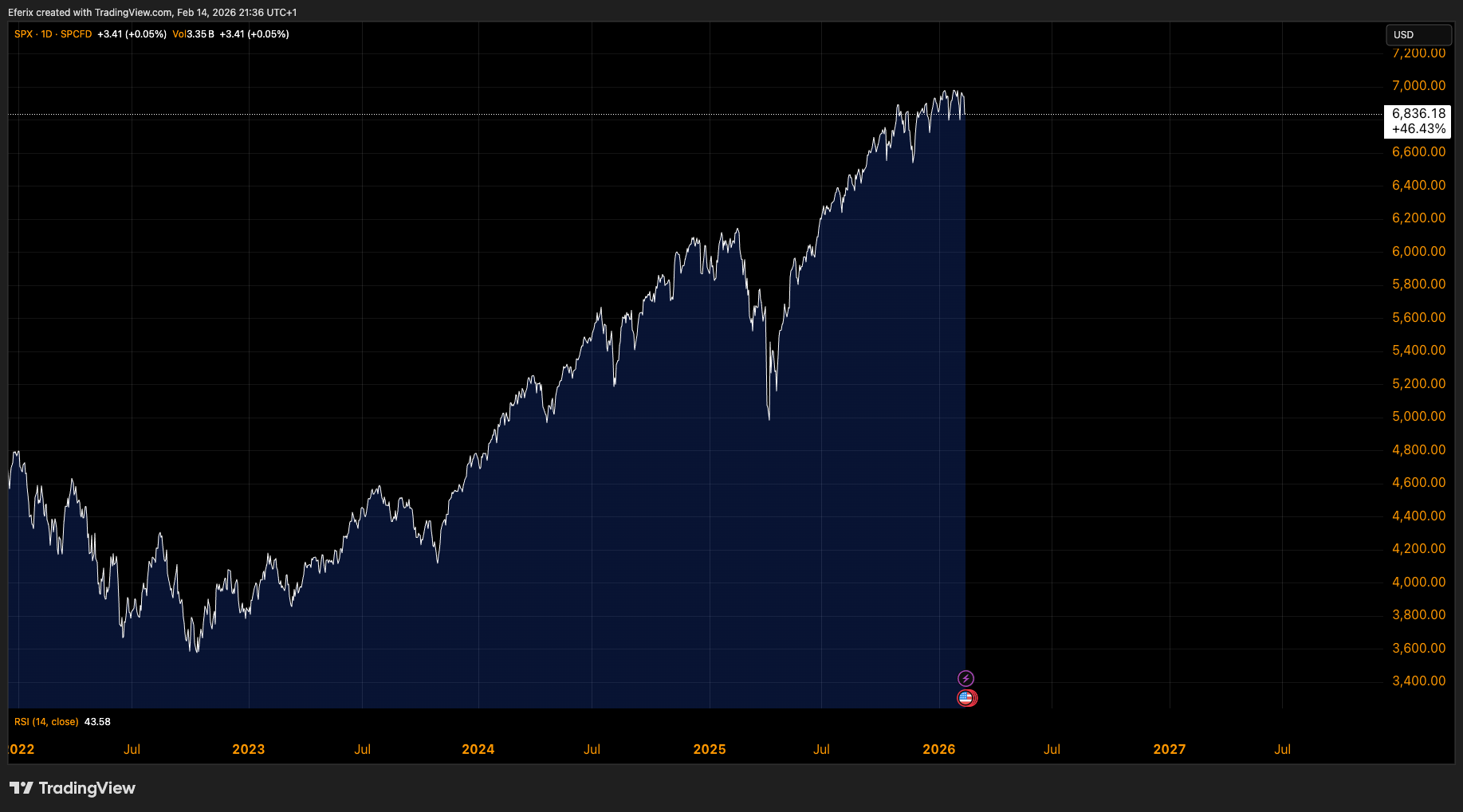
Yet, even if the product gained world wide adoption in a matter of weeks and crossed the bar of 100m active users sooner than any other technology before, the market’s reaction following its release was a widespread optimism in adopting this new technologies, and was more importantly the catalyst of the AI bull run we’re experiencing since then.
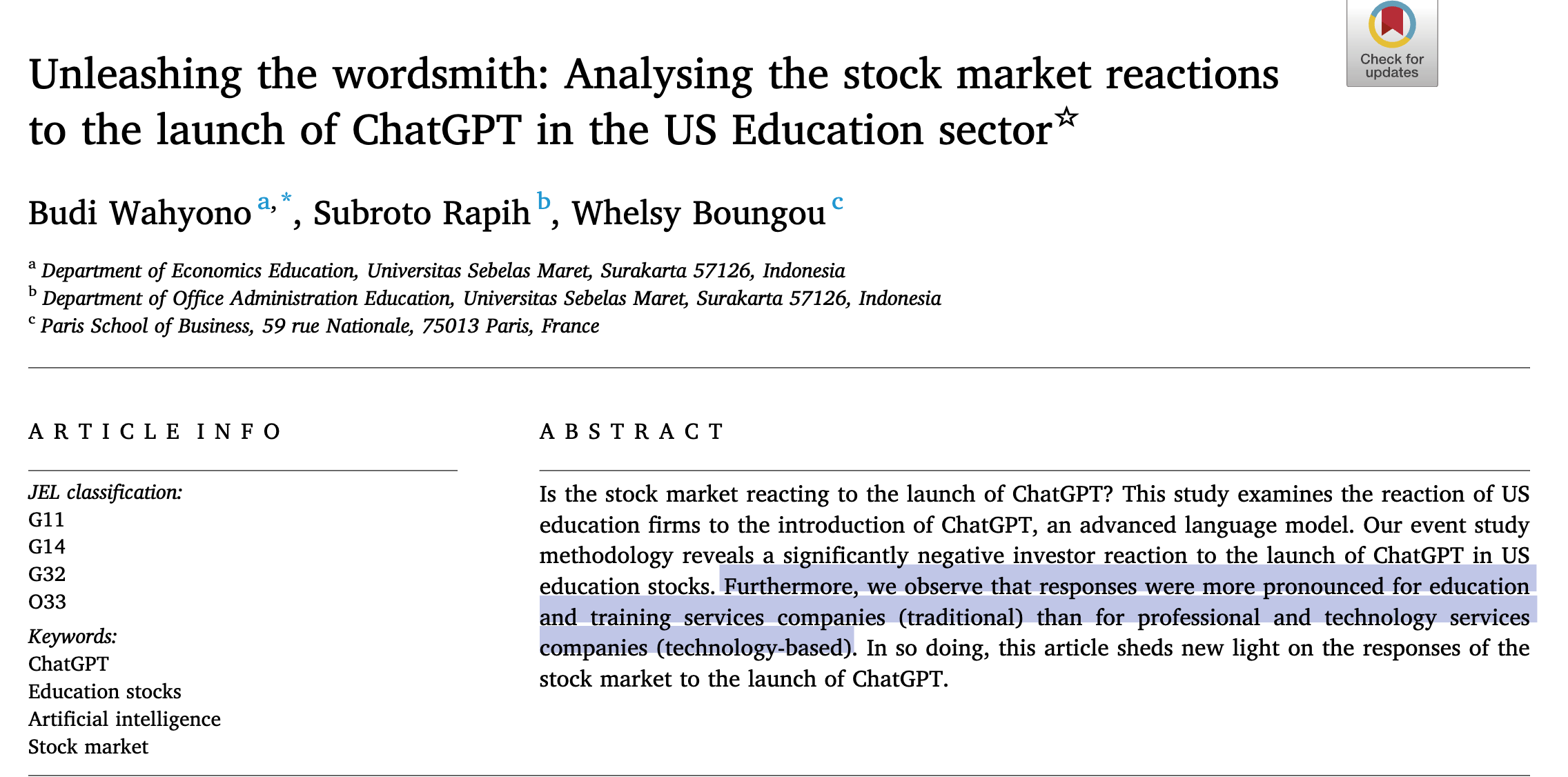
Of course, some sectors benefitted more than others. In a 2023 study over the reaction of education related stocks, researchers concluded that negative sentiment towards traditional education processes and platforms had worsened. On a more personal note, I’d like to add that even if most AI models can teach a topic better than my professors could ever do, traditional face to face lectures are the only ones who can connect the student to the material, as a discussion between two friends couldn’t be more authentic than face to face. Rick Rubin made an interesting remark on that subject on the a16z podcast last year, saying that most people have come to use AI in order to stop the thinking process instead of searching for the true reason they get that answer. I’m sadly seeing it with some of my classmates, were AI accomplishes most of the job, helping to get good grades, but the majority of the content will be forgotten a few months later.
After that first meeting with our next character to develop, Walter has never been the same man, like our companies have radically changed. Sadly for some of them, they got to serve the tool more than the tool served them, and then made their way to more difficult times.
Phyllis Dietrichson — AI
Like Artificial Intelligence, Barbara Stanwyck is too good to be true, and Ingrid Bergman dedfinitely robbed her Oscar at the 1945 Academy Awards, but let’s not enter into this debate.

AI has fascinated some executives from the start, with some screaming their lungs out in public that these new technologies were going to completely transform their ways of doing business, that they’d like to get replaced by models even in top management. Of course, it quickly got more complicated when we got to these machines’ ability frontiers. Later, those same executives presented themselves beaten by the realities of using AI in day-to-day operations, something that has been studied by the Harvard Business Review for a while, a report having been published a week ago about how AI is actually making work more intense rather that simplifying it. Here’s what they said: “In our in-progress research, we discovered that AI tools didn’t reduce work, they consistently intensified it. In an eight-month study of how generative AI changed work habits at a U.S.-based technology company with about 200 employees, we found that employees worked at a faster pace, took on a broader scope of tasks, and extended work into more hours of the day, often without being asked to do so. Importantly, the company did not mandate AI use (though it did offer enterprise subscriptions to commercially available AI tools). On their own initiative workers did more because AI made “doing more” feel possible, accessible, and in many cases intrinsically rewarding.
While this may sound like a dream come true for leaders, the changes brought about by enthusiastic AI adoption can be unsustainable, causing problems down the line. Once the excitement of experimenting fades, workers can find that their workload has quietly grown and feel stretched from juggling everything that’s suddenly on their plate. That workload creep can in turn lead to cognitive fatigue, burnout, and weakened decision-making. The productivity surge enjoyed at the beginning can give way to lower quality work, turnover, and other problems.”
AI then has possibly deceived some of us thinking we could get along smoothly, as it would when planting a new flower in our gardens. You just have to water it, and the rest will take care of itself. That’s exactly how Phyllis seduced Walter.
Keyes — The Investigator
Having our two protagonists conspiring the crime, one thinking they’ll run away together, things got a little more complicated when one of the salesman’s colleagues, intrigued by the Dietrichson family, started to investigate the case with much more attention.
That’s our debt. Or more precisely, we are the investigator, debt is our intuition.

A month ago, I came back to Substack and decided to commit to this newsletter, started with a very fun to write post about the current state of our debt. Since then, companies of the S&P made themselves known for potentially dealing with accounting practices to decrease their debt on paper, such as Meta’s $27B data center deal that has been kept off its balance sheet. Since Liberation Day, which of course changed the trajectory of the entire stock market for a brief minute, Investment Grade Corporate Bond Yields have decreased steadily, while High Yield Corporate Bonds have also know a slight diminution, albeit more modest, with credit spreads having widened between September and the beginning of 2026. Yet this orgy of debt as some call it has to be monitored, because the surface looks clean, but certain users and researchers have been begging us to look under the hood for quite some time.
One of these broking components is Private Credit. As a reminder, Private Credit is being funded by us. Pension funds, Sovereign Funds, Life Insurance and so forth have all been going around the pockets of AI racers in order to fund these gigantic funding needs and circular deals where players have become to big to fail. Since the tech crash we experienced two weeks ago, more and more investors are digging up into the leveraged balance sheets of distressed tech players and are tracing the actors who facilitated this growing credit risk exposure. For that reason, and the conclusion that private credit and business development companies aren’t necessarily as safe as they claimed and still claim on television today, the sector experienced an intense pullback following the Thursday tech crash, with some companies losing consecutively more than 20% on every single sequence.
Keyes (us), is then assessing whether is intuition is getting real or not, that some of the actors are over-leveraged and getting in delicate positions. The fact that Nvidia’s funding of OpenAI came under revision is an even more acute indication of the situation in which we’re finding ourselves.
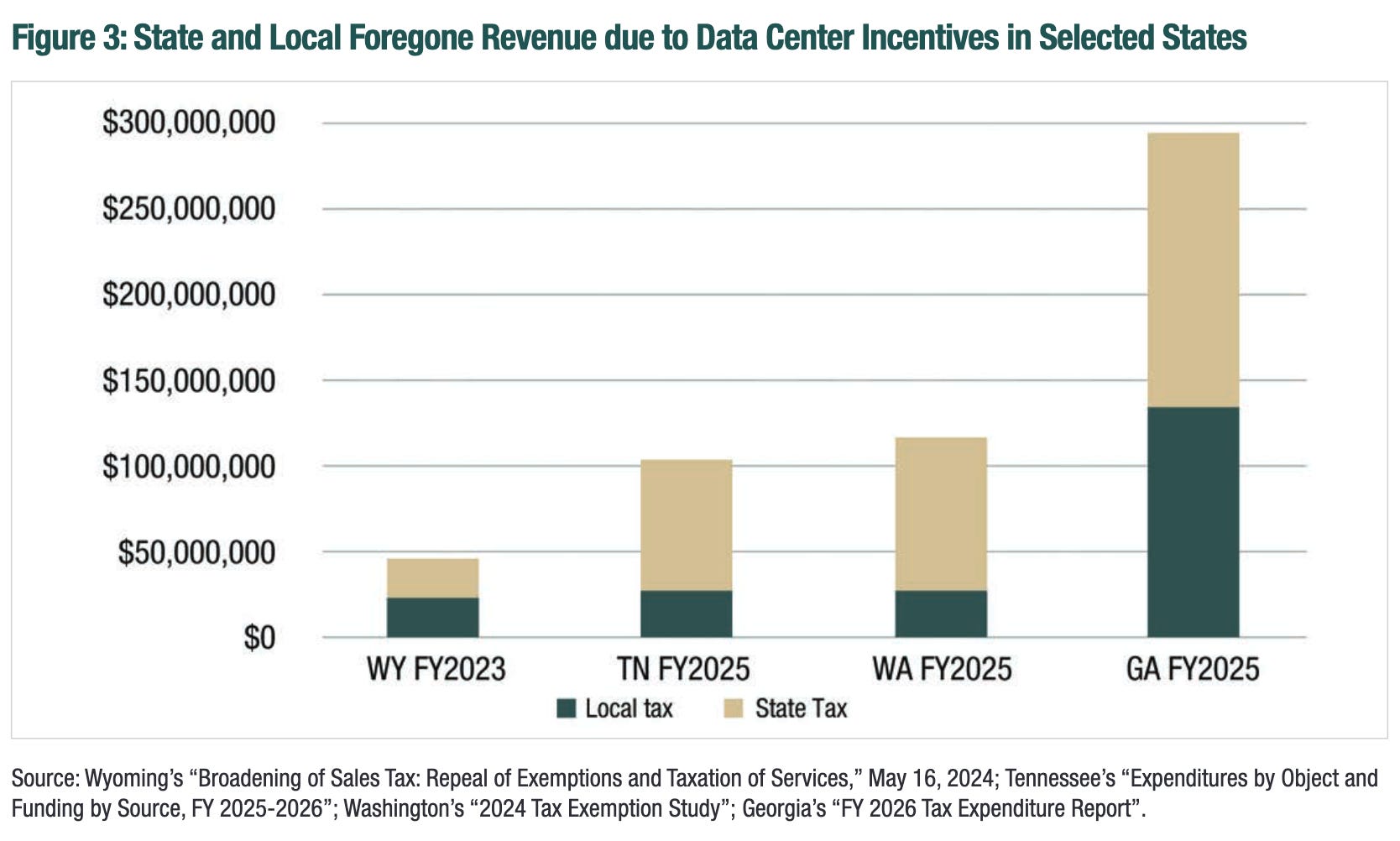
Another way AI is escaping its due is by taking away parts of revenues from local and state governments in the United States with data center incentives but data center tax exemptions as well. A 2025 report on the impact of the AI infrastructure building on state budgets found that some disclosing states reports’ were loosing more than $200m a year because of still applicable tax exemptions rules for data center development. Originally passed for much smaller hyperscalers, legislation allows companies to be exempt from taxes or benefit from incentives on things such as construction materials, servers, cabling, security, power generators, fire protection equipment, ventilation, lobbies and shipping rooms, power-grid connections, power source systems like batteries, etc. Even if it made sense a dozen of years ago, these buildings current always growing size and revenue capacity is hurting federal budgets.
Phyllis’ husband
It all starts with him. Phyllis’ way out of the rat race, the one that allowed her to live a luxurious lifestyle after she took care of his dying wife. As you can imagine, the wife wasn’t entirely sick, and her treatment got compromised by the sweet nurse Phyllis once was.

As Walter rings his home to renew the life insurance policy, the husband is already a well established man with his younger wife, who he trusts now blindly. That’s his mistake, and it will be the last. Getting out one last time, he gets strangled in his car, and gets abandoned near the train passage he was supposed to ride on. Declared as an accident just as it has been planned, the new couple gets double indemnity, one directly vouching for it in the insurance files, while the other one prepares her plan to make yet another victim.
Who’s the husband ? The workers.
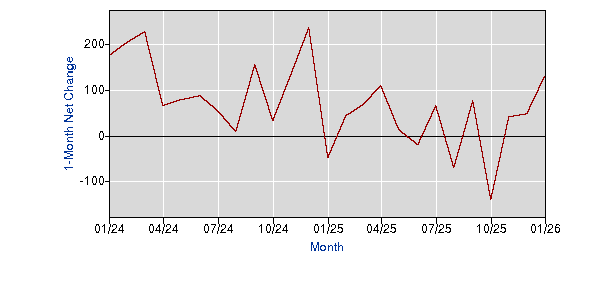
Since the launch of ChatGPT, the civilian unemployment rate increased a full percent, nearing 4.5% a few months ago, while the monthly employment numbers came to be revised down for every single month of 2025. The Fed, having been relatively satisfied by the rate of inflation coming down and not really exceeding the warning zones, has focused nearly entirely on employment numbers. Cutting rates hasn’t sadly given any relief to the job market, as the latter got progressively worse over the last few months. January’s surprising employment numbers have yet to proof their worth as the next report is already being waited for. These growing issues in the job market have multiple reasons, to complex to simplify in a single post, yet two characteristics have to be talked about.
The first one is obviously related to the government cutting federal jobs, in its pursuit of reducing the liberticide bureaucracy. These massive layoffs haven’t obviously been caused by the rise of Artificial Intelligence, yet this administration’s push into the use of these technologies in day-to-day government operations will certainly advocate for its proprietary development and use inside the federal machine, even if they lately admitted considering the reemployment of a large part of the fired federal workforce in the same positions over the next few months, something the Fed will certainly have to keep in mind in its future actions and something that will possibly influence the job statistics of the BLS.
The second one is COVID related over-hires, which are the given reason for these mass layoffs waves that have been happening in a few sectors yet in majority in the usual suspect industry, tech. Yet another reason is also being exposed in front of our eyes in this earnings season, CAPEX. Amazon’s plans to expand its spending in 2026 to levels never seen before, Meta following the same playbook and Google expanding its bonds offering and R&D spending is already part of the reason why these companies have been drastically reducing their workforce over the past quarter.
Where are we going ?
Approaching the climax of the movie, we sense that Walter Neff’s character is progressively getting more and more compromised, Keyes describing him in details the intuition he has, and actively looking for a potential conspirator of Phyllis’ crime. At the time they should be planning their escape, they meet in her house, where it all started, and after a last dialogue between the two crooks and cheaters, after discovering at last who she is and what situation she’s responsible for, they kill each other.
The companies that have embraced AI too early, without a proper plan but just the vision, or too late, lacking the vision but taking the plan from elsewhere, have been under the radar over the past couple of weeks. Also, companies which deliver services that can be easily copied by new AI tech like Claude for Desktop, as for example Monday.com services, embarked on a bearish path that will probably never be positive ever again. By releasing that kind of tool, are discovered companies without any revolutionary product, that came to popularity because their product was a little more designed or different from the others. On the other hand, creative stocks have experienced a pullback as well, but for investors’ vision reasons more than actual fundamental play. Adobe’s stock price tanked, while the company is and has been the main actor in the creator sector and that its numbers aren’t contradicting the bullish scenario.
In the end, companies are dying ? Yes, some of them, but you can also appreciate the fact that their AI companions are dying too. One of these latest important AI model developers deaths is Builder.ai, who was behind the AI chatbot Natasha. But there will be more, and not just the ones building AI, some embracing it too. We don’t know for sure that OpenAI will survive in the coming years, even if it made itself become too big to fail. As much as they are dying to get additional revenue and will probably do anything at this point, the company’s models still are in the best performing bunch of known LLMs. Still, the AI race’s Chinese counterparts have been pretty quiet on the international scene, even if their own models are getting better and better and may even score higher that some of our US-European (even if the latter has much less influence) models. ChatGPT’s creator company is even arguing online that its Chinese opposition, Deepseek, is fuelling its brand new AI models with ChatGPT’s core databases, as the news website The Rest Of the World Titles, “Free-riding on American R&D”.
AI is the seducer, Companies are the seduced ones, Debt is the Crime and Workers are the Dead. In the end, they either all die while letting the others take on their work, or they all come into an agreement to be gentle and never cause harm.
We are the ones that can define which scenario is happening and is going to happen.
amazing article!