
Snackable • Streaming
How Netflix's expected move might change the entertainment industry.

In recent months, Netflix executives have announced an upcoming release of a great redesign in the platform’s mobile user interface. Greg Peters, the streaming giant’s co-CEO, said it will better serve the company’s ambitions in the decades to come, including new types of content. The star of that new redesign might very well be, as mentioned by analysts and employees around the world, short form video content. This in order to tackle the company’s main problem, its relation to younger audiences. What could it then mean for the company ? But more importantly, what does it say about our culture ?
Netflix’s 2025
Since Q3 2022, the company only missed quarterly revenues’ expectations four times. As much as they stand in line with the number every single quarter passing, the general sentiment around earnings day hasn’t exactly been positive in the last year. As much as the exit of the company from the bidding war’s fighting cage presented itself as a relief for investors, the stock price reflected constant uncertainty around the streaming giant’s value and future outlook. Analysts have driven their prices up or down without interruption throughout the year, so much so that equity research posts on Substack might be closer to the real value of the company. Netflix’s EV/EBITDA decreased throughout the year, marked by a diminishing enterprise value, caused in majority by the Warner Bros deal.
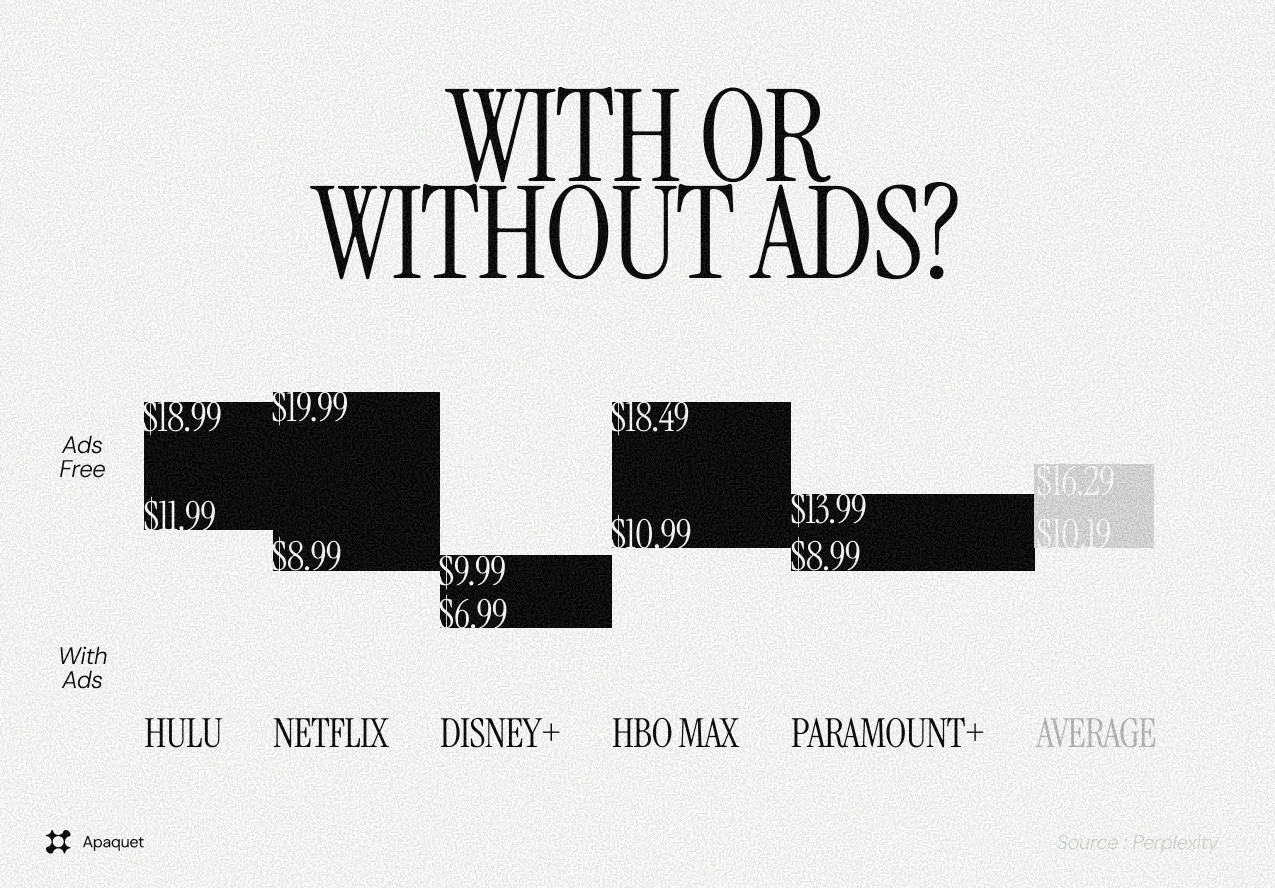
Last year’s discussions have mainly brought forward ads and AI in Netflix’s business model as the potential unique drivers in revenue and in subscribers’ retention, besides of course the release of the platform’s content, that sadly comes second in its shareholders’ view. Ads are in fact a more important business than ever before for the company, because of its slowing subscribers’ growth and general expansion limitations. We know that Ads and AI are the go-to strategy for streaming services for the past 2 years, as the majority finds itself with the same growth problem. As this strategy tries to convert to revenue, and not just a trial package, tier prices for ad free subscription plans have risen tremendously over the past year. As the graphic below shows, current ads free and ads included plans of the big 5 average between $10.19/month and $16.29/month, the prices used being only the cheapest base and premium choices (Netflix and HBO have even more premium ad free tiers, costing respectively $26.99/m and $22.99/m). One of the company’s clear goals is to augment their advertisers’ visibility, this by pushing more affordable first-tier plans directed towards casual binge watchers and teens. It seems to work out for now, as the company reports a 2.5x growth in its advertising business between 2024 and last year.
Content Quality and Ratings
In a more cinephile related attempt to approach the company’s products, Netflix’s new movie ratings have increased as well in 2025. On 126 movies released last year, the average movie rating on the platform Letterboxd has risen from 2.29 out of 5 the year before to 2.75 in 2025, as developed more broadly in the graphic below.
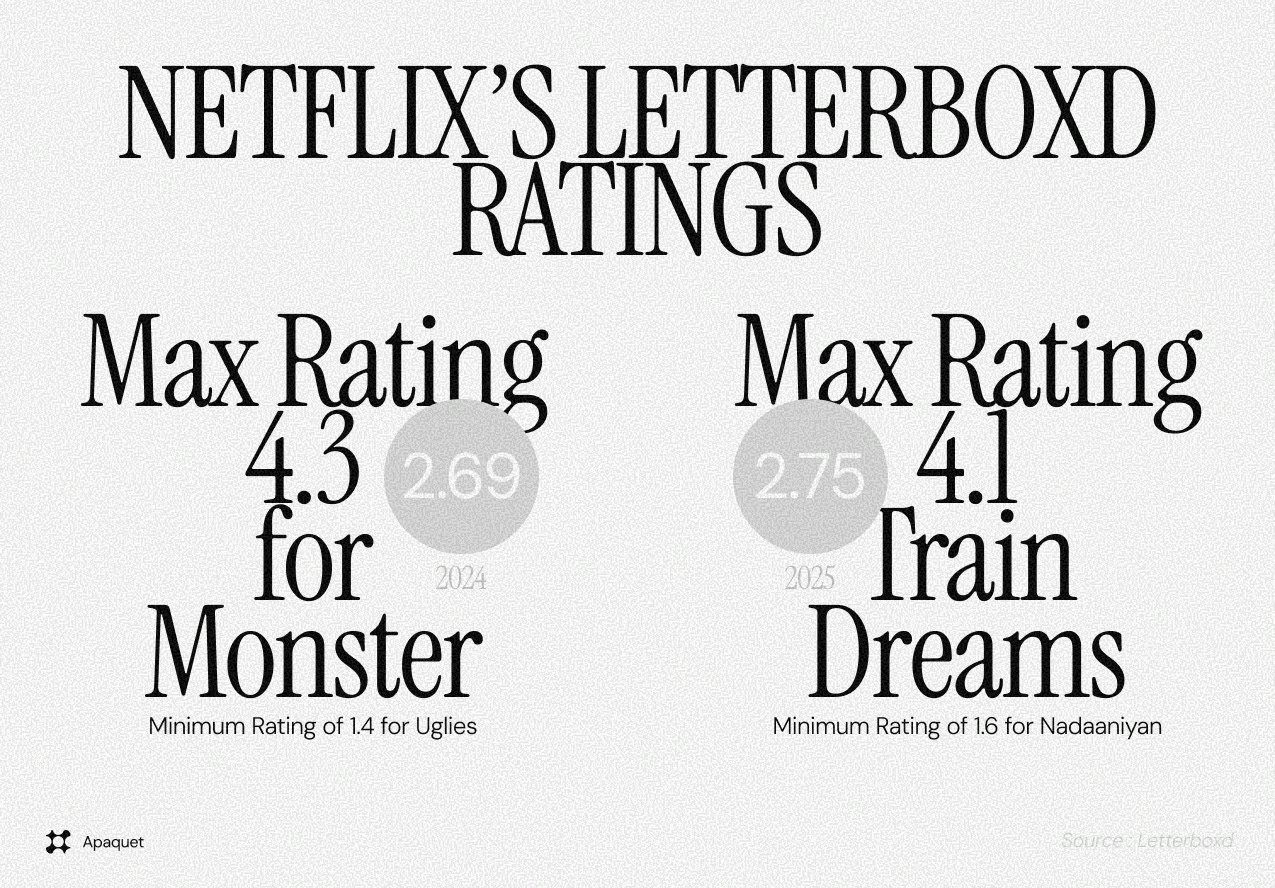
Last year was then a more pleasant year in terms of Netflix movies releases for the audience, a marker that should, although it presents difficulty because of more important factors like culture and consumer appetite, increase over the next years. Sad are the platforms whose content decreases in quality. Netflix has been known to offer relatively good productions in the past, proved by its 188 Oscars’ nominations and 33 wins all categories included. The 2026 ballot crowned KPop Demon Hunters, Frankenstein, All the Empty Rooms and my personal favorite the live action short-film The Singers.
Netflix’s battle spaces
As much as the company pioneered video streaming and has been the industry’s most important player since then, its culture of reinvention has always proved poor until recent years. Netflix’s projects have indeed performed throughout the 2010s and since the beginning of the Covid pandemic, yet its breaking into more various revenue streams is quite new. Gaming has been introduced as a real company project in Q2 2021 with its announcement of five titles, available at the end of the year for Android users. It then proceeded to acquire a game studio, Night School Studio, proof of its gaming ambitions and expansion beyond plain video streaming. Since then, the company released more than 120 titles around the world, the count varying from the location of the player. In January’s shareholder letter, the company laid out their 2026 focus: ads, games, live, podcasts. Netflix is setting itself at the forefront of the entertainment industry.
Some of last year’s live events for example, are already memorable. Joshua v. Paul has drawn more than 30M viewers, and the company has noted a surge in subscriber growth in Japan as they announced they will broadcast all 47 games of the World Baseball Classic. The NFL Christmas Game Day was also a huge success, driving “disproportionate excitement and signups”. Netflix isn’t the only streaming service to focus heavily on live experiences and sports broadcasting. Others, like Paramount and Disney, have placed sport diffusion as key growth drivers in the coming years, notably through the inclusion of ESPN packs in the latter, and UFC, NFL games in the primer. This cable TV replacement is not only pushed by movies and regular streaming, but also by news and live sporting events, as research shows more and more individuals canceled their cable TV plans and stayed with streaming only. As the world population slowly drives away from luxury physical items, the general trend tends to augment live experiences’ prices, placing streaming services as the alternative for people that still want to watch the game from their phones, without paying more than a certain price. Next years’ events will be particularly crucial, as the FIFA World Cup in the US, Mexico and Canada historically attracts billions of viewers around the world.
Yet one line of that annual shareholder letter gained more interest from investors and analysts around the world.
Netflix and Snacks ?
Between two paragraphs, sitting in the middle of the fifth page, Netflix reveals its upcoming mobile redesign. Not exactly a surprise, the TV app having been upgraded in the last year, it was as we say in french “dans l’ordre des choses”. As much as the company pushes AI integration into its app in domains such as users retention and targeted recommendations, recent management comments confirm a stronger push on the technology in the future.
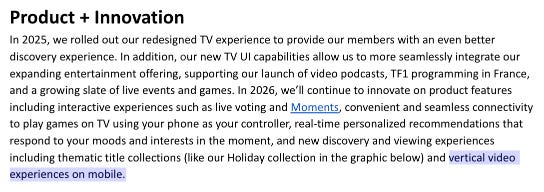
Short form video content is planned. Of all the analysts around the world advocating for its integration in Netflix’s business model, one in particular has been at the forefront of the debate, even so that he might be the only one whose notes on the upcoming feature are quoted in the media, JPMorgan’s Doug Anmuth having called for the vertical video feed to be released no later than this month.
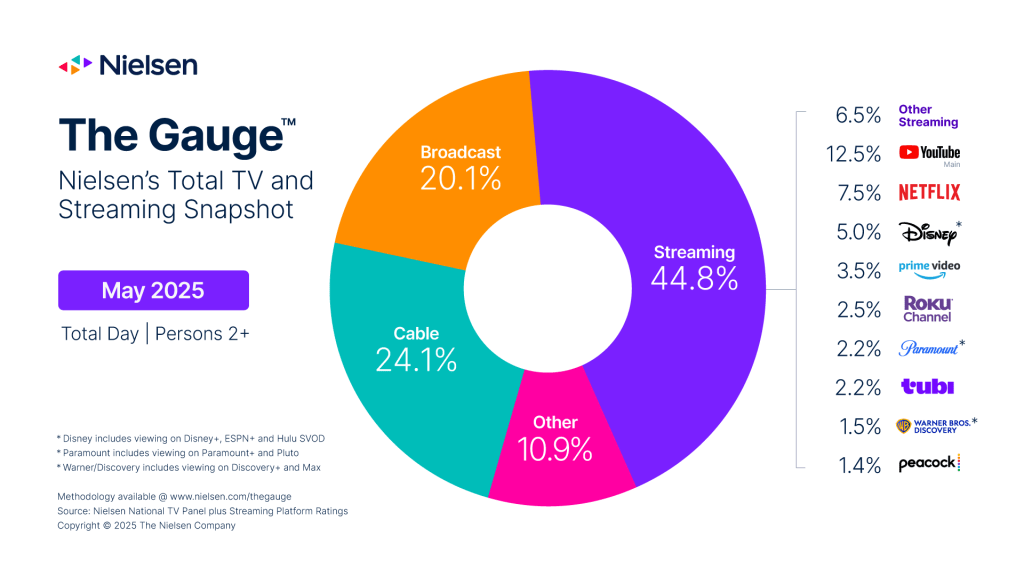
Netflix’s next step being short form content is nearly obvious. Loosing ground in the streaming landscape to Youtube and as more and more time is being spent on social media, Netflix’s way to take back its users attention might be through scrolling. As of May 2025, Netflix’s share of the TV and Streaming markets was 7.5%, shy of Youtube’s 12%, and having decreased from its 8% peak a couple of years before.
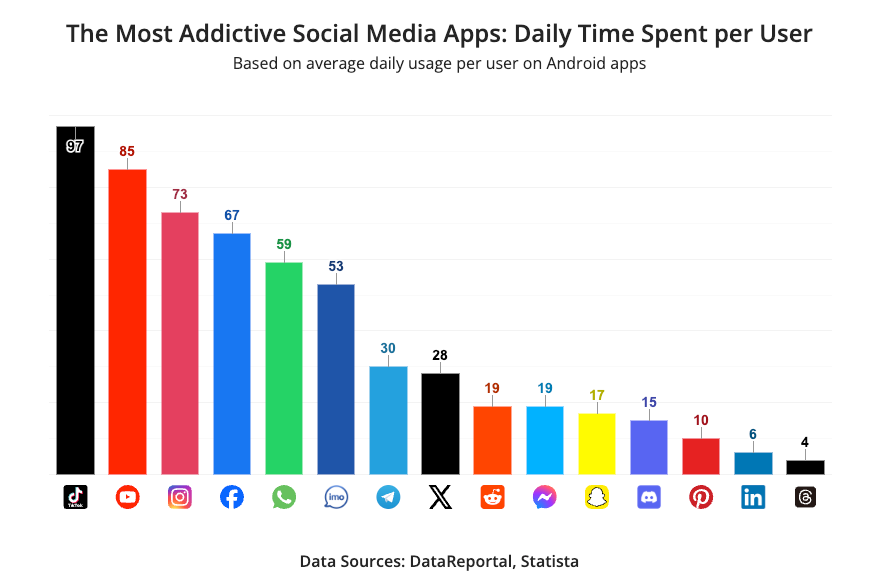
Streaming services adoption depends of age brackets as well. Research has shown for example, that even if Gen Z users have nearly been born with streaming services in their hands, their adoption number is still shy compared to Millennials, where more than 90% of US Adults between the ages of 30 to 49 have subscribed to multiple streaming services, Prime Video and Netflix on top of the list. Short form content is then, these numbers being known, an attempt to augment the size of Gen Z and Gen Alpha users, presenting themselves as possible future long term users of the platform’s many services. Since its invention, short form video content has ruled the world. The most time consuming apps on Android, for example, are in majority scrolling-related social media apps, Tiktok in the top position.
Where could Netflix enter ?
We know from other social media sites that clipped movie scenes are particularly popular in the short form video format, gathering tens of millions of likes and follows on multiple platforms, with social accounts being created just for certain movies to be divided into a hundred of smaller video clips. As much as this trend isn’t completely legal, its a clear driver of user engagement on several platforms. Netflix owning the material could upscale the content’s quality, and present itself as trial clips on users to attract them into another Netflix Original movie or TV Show. It would be complicated to watch the entirety of Stranger Things S5 through Tiktok videos though.
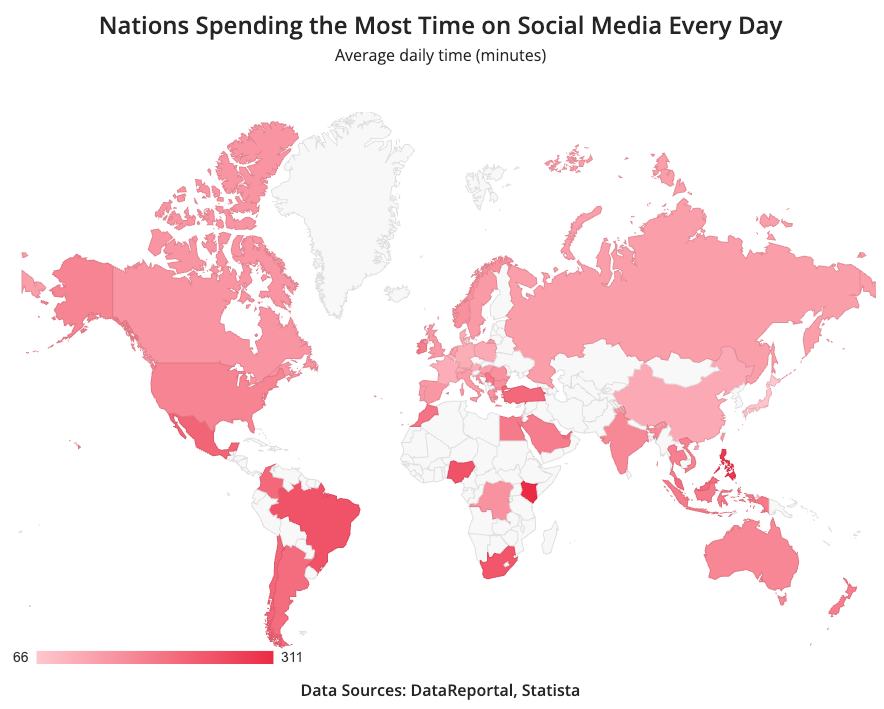
Netflix’s main markets are also correlated with increased use of social media, something the integration of vertical video format would allow the company to potentially drive its subscriber base up, or at least its retention rates. The countries with the more subscribers to the Streaming Giant are the United States, United Kingdom, Brazil, Germany, Mexico, France, India, Canada and Japan. These nations find themselves in the upper median of daily social media consumption with an average of 152 minutes per day, besides Japan, which has one of the smallest social media retentions in the world. The largest consumption time of the group is Brazil, with approximately 250 minutes spent every single day.
Netflix’s 2026
Q1 26 was a relatively good quarter for the company. Its revenues are in line with expectations, and even though their Earnings per Share heavily missed on the analysts’ numbers, numbers have risen pretty impressively since Q4 25. Netflix’s FCF have risen two fold, while Operating, Gross Profit, Net Profit and EBITDA margins rose as well. The company’s Quick and Current ratios have advanced to more secure territory, as the streaming giant’ debt outlook stabilizes, and its Capex 1Y growth proves its ambitions to advance innovation and market expansion. The company’s Q2 earnings will take place July 16th.
The Culture Problem
Streaming and content consumerism have drawn users away from cinemas. As theaters’ costs stayed the same throughout the same period, it is no surprise that the audience has seen ticket prices go up for the owners to feed their families at the end of each month. In the same time, a more important addiction to social media has proven to be destructive of their users’ focus and dopamine levels, as much as changing the perception of power and influence. Books and books have been written about these topics, like Bruno Patino’s Submersion, James Curran and Joanna Redden’s Understanding Media and Max Fisher’s The Chaos Machine, that may go beyond the scope of this post, but are still very interesting reads.
Here’s where personal opinion comes in. As a Netflix investor, the value that can be created from short form video content is nearly unlimited. As a cinephile, my worry is that by pushing more aggressively the integration of this type of content, the industry that I love will suffer from even more distorted appreciations and content consumption rather than redirecting teens and young adults to a deeper movie experience strengthening the connection to culture. The already existing fear from the cinephile community has been streaming platform’s control over available content. Movies are more and more being released without proper theater screenings, DVDs are being abandoned, and content whose characteristics do not enter in the scope of “watchability” (like viewing quotas, older release date, etc.) might be forgotten while still holding precious creative insights. Netflix’s entry into a more easy path to user growth and increase in views is slippery, which is why I trust the management of the company, certainly movie lovers at heart, that this new feature will not come at the expense of losing what cinema really means.
If you liked this article, I recommend you checking out older ones, subscribe and share this post !
Interesting piece. I agree with the concern here.
I’m not convinced this makes Netflix stronger. Netflix’s real value is premium long-form entertainment, not becoming another scroll app.
The risk is that it boosts short-term attention while weakening the brand and the way people value Netflix content. If anything, they should stay away from scroll crap.
More engagement is not always better engagement.